India's Living Textile Traditions: Why Every Region Weaves a Different Story

One of the easiest souvenirs to buy in India is a scarf.
One of the easiest mistakes is buying it without knowing its story.

Textiles are woven into everyday life across India, but they also tell the story of geography, climate, trade, migration and craftsmanship. As you travel from one region to another, the fabrics, techniques and colors change just as noticeably as the food or architecture. Learning to recognize a few of these traditions doesn't just make shopping more rewarding—it helps you understand why different parts of India developed such distinct identities.
You don't need to become a textile expert. Knowing the basics is enough to notice details many travelers walk past.
Why every region looks different
India doesn't have one textile tradition—it has hundreds. Communities worked with the materials available to them and adapted to local climates over centuries. Cotton flourished across much of western India, silk became closely associated with regions such as Varanasi and Kanchipuram, while wool shaped traditions in the Himalayas. Royal courts commissioned elaborate fabrics, merchants carried techniques across trade routes and artisan communities refined their skills over generations.
The result is a country where fabrics often tell you exactly where you are.

Rajasthan: Color in the desert
Rajasthan's dry climate and trading history gave rise to some of India's best-known textile traditions.
Around Jaipur, Sanganeri and Bagru block printing transformed plain cotton into beautifully patterned fabrics using hand-carved wooden blocks, while Bandhani (also called Bandhej) created intricate tie-dyed designs that remain closely associated with Rajasthan and neighbouring Gujarat. The state is also known for Leheriya, a flowing striped tie-dye traditionally worn during the monsoon season.
If you're exploring Jaipur, visit a working block-printing studio if your itinerary allows. Watching artisans carve blocks, prepare natural dyes and print fabric by hand gives far more context than browsing finished products in a shop.
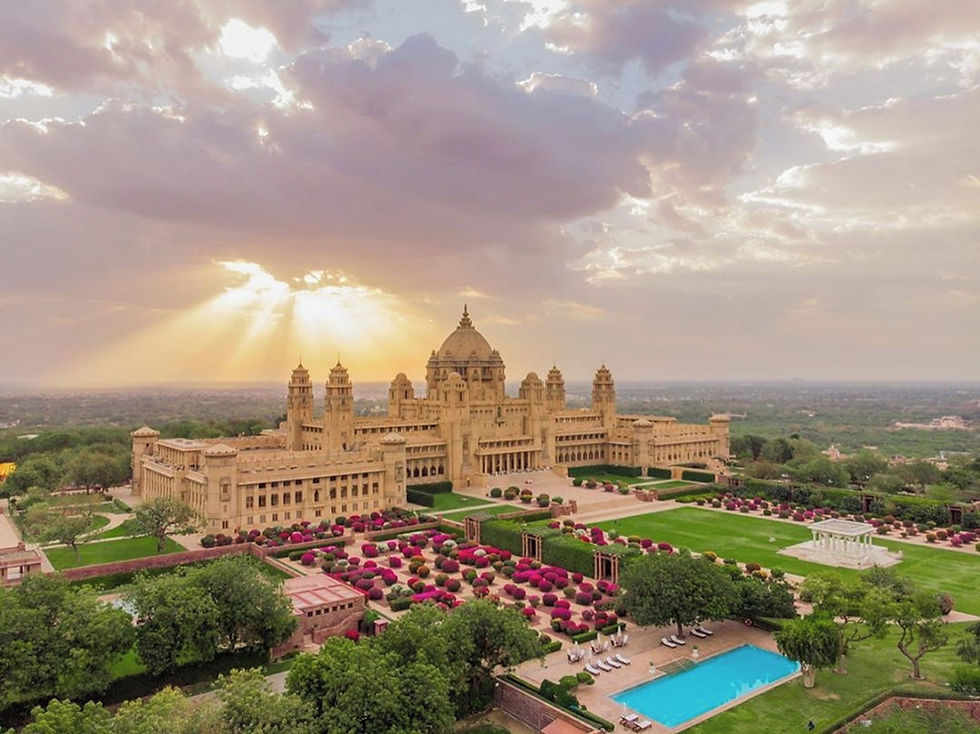
Heritage properties such as Samode Haveli and RAAS Jodhpur also encourage guests to explore local craft traditions, markets and artisan neighborhoods as part of experiencing the destination rather than simply sightseeing.

Gujarat: Precision, patience and extraordinary craftsmanship
If Rajasthan celebrates colour, Gujarat celebrates precision.
Patola from Patan is one of India's most remarkable weaving traditions. Every silk thread is individually tied and dyed before weaving begins using the highly complex double ikat technique. The pattern only appears when the dyed warp and weft threads align perfectly on the loom, a process that can take many months—and sometimes longer—for a single sari.
The state is equally celebrated for Ajrakh, an ancient block-printing tradition centered around Kutch. Using carved wooden blocks, natural dyes and repeated stages of printing, washing and dyeing, artisans create richly layered geometric designs in deep indigo, earthy reds and black.
If Ahmedabad is your introduction to Gujarat's textile heritage, The House of MG is an especially fitting place to stay. Beyond its heritage architecture, the hotel celebrates the city's craft traditions through its textile gallery, heritage experiences and strong connection to old Ahmedabad. Its rooftop restaurant, Agashiye, is also widely regarded as one of the city's best introductions to traditional Gujarati cuisine, making it a natural complement to a culture-focused itinerary.

Varanasi: Silk woven for celebration
Few fabrics are as closely associated with Indian weddings as Banarasi silk. For centuries, weavers in Varanasi have created richly detailed brocades using silk and metallic threads, producing textiles that remain among India's most celebrated ceremonial fabrics. While many visitors admire them in shop windows, seeing handlooms in operation offers a much deeper appreciation for the craftsmanship behind every piece. Even if you're not shopping, understanding Banarasi silk adds another dimension to exploring one of India's oldest living cities.
Heritage stays such as BrijRama Palace overlooking the Ganges or Taj Ganges, Varanasi provide convenient access to the city's weaving districts, silk shops and cultural experiences that help bring Banarasi craftsmanship into context.

Southern India: Silk with a different character
Travel south and the story changes again. Kanchipuram, about two hours from Chennai, is famous for its richly woven silk saris distinguished by vibrant colours, contrasting borders and exceptional durability. Visiting the town itself provides valuable context, as weaving remains an important part of the local economy and identity.
Travelers exploring Kanchipuram often combine it with a stay in Taj Fisherman's Cove Resort & Spa or The Leela Palace Chennai, both of which make an easy base for day trips into one of India's most celebrated silk-weaving towns.
Further west, Kerala's elegant Kasavu textiles are instantly recognizable by their simple off-white fabric accented with gold borders. Heritage properties such as CGH Earth's Brunton Boatyard in Kochi or Kumarakom Lake Resort also offer excellent opportunities to discover Kerala's traditional Kasavu textiles alongside the state's history, cuisine and backwater culture.
Finally, Mysore silk reflects Karnataka's own long tradition of silk weaving. Staying at heritage-inspired properties such as The Royal Orchid Metropole Mysore or The Windflower Resort & Spa Mysore makes it easy to combine Mysore's palaces with its long-standing silk-weaving traditions.
Kashmir: Understanding real pashmina
Few textiles are as misunderstood as pashmina.
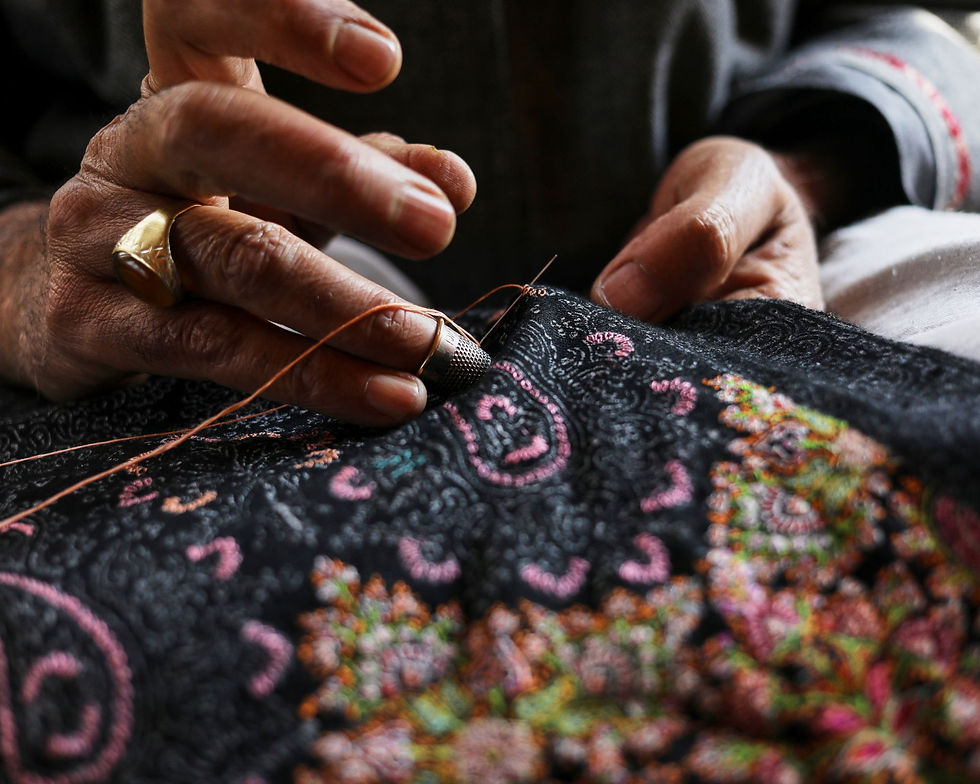
Authentic pashmina is made from the fine undercoat of Changthangi goats found in the high Himalayas, and genuine handwoven pieces require exceptional skill. Because of its reputation, many products marketed simply as "pashmina" are actually wool or blended fabrics.
If purchasing pashmina is important to you, buy from established specialists who can explain its origin and craftsmanship rather than making an impulse purchase in a tourist market.
Luxury stays such as The Khyber Himalayan Resort & Spa in Gulmarg or the historic houseboats on Srinagar's Dal Lake can help arrange visits to trusted pashmina artisans and local craft workshops.

Buying thoughtfully
India offers everything from inexpensive market souvenirs to museum-quality textiles that can take months to produce. Most travelers don't need either extreme.
One practical middle ground is to buy from respected artisan cooperatives, established textile houses or carefully curated hotel boutiques. While you'll usually pay more than you would in a local market, those collections are often selected for authenticity and quality rather than bargain pricing. Many Indian families and returning visitors, however, also have their own trusted independent stores and local textile merchants that they've relied on for years.
The goal is to understand what you're buying: Ask where it was made. Ask which technique was used. Learn the name of the craft rather than simply the name of the product. Those conversations often become as memorable as the textile itself.
You'll begin noticing textiles everywhere
Once you start recognizing India's textile traditions, you'll see them far beyond markets. They appear in wedding celebrations, temple offerings, hotel furnishings, festival clothing and everyday life. The embroidered jacket worn by a guide in Rajasthan, the silk sari at a family celebration in Tamil Nadu or the handwoven shawl draped over someone's shoulders in Kashmir all reflect regional traditions that continue to evolve rather than existing only in museums.
That's what makes India's textile heritage so remarkable. It isn't preserved behind glass. It's still being woven, printed, dyed and worn every day.