Sarnath From Varanasi: A More Thoughtful Way to Experience India’s UNESCO World Heritage Site

Updated: Jul 29
In July 2026, Sarnath was officially inscribed on the UNESCO World Heritage List as India’s 45th World Heritage Site. The designation gives international travelers a timely reason to look beyond Varanasi’s energetic riverfront and spend a few hours at one of northern India’s most significant cultural landmarks.
Located approximately 10 kilometers northeast of Varanasi, Sarnath is where the Buddha delivered his first teaching after attaining enlightenment, setting the "Wheel of Dharma" in motion. Over the following centuries, it developed into a premier Asian center of learning, art, and cultural exchange.
Today, its appeal extends well beyond archaeology or religious pilgrimage. A well-planned visit brings together monumental brick architecture, world-class sculpture, serene landscaped grounds, and active international monasteries that demonstrate how ideas born in India traveled across Asia and took on distinct artistic forms.

Sarnath at a Glance
Best for: Travelers interested in ancient history, Buddhist art, architecture, and international cultural sites.
Time needed: Four to five hours, plus transportation from Varanasi.
Closest airport: Lal Bahadur Shastri International Airport (VNS), Varanasi.
Best base: Varanasi.
Best season: November through February, or early morning during warmer months.
Getting there: Prearranged air-conditioned car with driver or a guided half-day tour.
Do not miss: Chaukhandi Stupa, Dhamek Stupa, Sarnath Archaeological Museum, and Mulagandha Kuti Vihara.
Ideal pairing: A three- to four-day stay in Varanasi.
Why Sarnath is Worth Leaving Varanasi For
Varanasi can be visually and physically intense, with dense old-city lanes, riverbank ceremonies, and continuous sensory activity. Sarnath offers a quiet, expansive contrast without requiring an extra flight, train journey, or hotel transfer.
The UNESCO inscription covers both Chaukhandi Stupa and the principal archaeological remains located about 600 meters north. Together, they preserve a sacred landscape shaped across more than two millennia.
For travelers, the most rewarding aspect of Sarnath is seeing how an ancient Indian site remains connected to communities across modern Asia. That narrative becomes tangible as you move between 3rd-century BCE brick foundations, 5th-century Gupta sculptures in the museum, and living monasteries built by Buddhist groups from Thailand, Japan, Tibet, and Sri Lanka.

The Core Route: Stupas & Archaeological Ruins
1. Stop First at Chaukhandi Stupa
Standing near the main entrance road to Sarnath, this stepped brick mound marks the spot where Buddha was reunited with his five former companions after attaining enlightenment. The octagonal tower atop the stupa was added much later during the Mughal era by Emperor Akbar’s governor, creating a unique historical blend of Buddhist and Islamic architectural layers.
2. Move to the Main Archaeological Complex & Dhamek Stupa
The cylindrical Dhamek Stupa is the visual centerpiece of Sarnath. Standing over 100 feet tall, its scale is striking—especially the contrast between the massive upper brick structure and the intricate 5th-century Gupta-era floral carvings around its lower stone belt.
Walk around the stupa clockwise along the paved pathways. The surrounding grounds contain the foundations of ancient monasteries (viharas), smaller votive stupas, and the base of the original Ashokan Pillar. Because archaeological ruins can be difficult to interpret on your own, hiring a licensed local guide at the entrance can significantly enrich your understanding of the site.
Prefer a pre-booked guided visit? Consider Viator’s Sarnath Tour from Varanasi, a 3-hour walking tour of Buddhism Sarnath
The Museum is Essential
The Sarnath Archaeological Museum sits directly opposite the main ruins and holds the world’s finest collection of Buddhist and Gupta-period sculpture excavated from the site.
Its undisputed masterwork is the Lion Capital of Ashoka (c. 250 BCE). Featuring four back-to-back lions atop a wheel-carved capital, this sculpture served as the direct inspiration for India’s Official State Emblem, while the Dharma Chakra (wheel) at its base sits at the center of the Indian national flag. Seeing this iconic masterpiece in person bridges ancient Indian art directly to the modern nation-state.
Crucial Tip: The Sarnath Archaeological Museum is closed on Fridays. Plan your trip for any other day of the week to ensure you do not miss it.
Allow approximately 45 to 60 minutes for the galleries. Photography regulations and bag storage procedures can change, so check current guidelines upon entry.

Choose the Monasteries Carefully
Sarnath’s international monasteries showcase how Buddhist traditions adapted their artistic styles across different cultures while maintaining a connection to this ancient holy site.
Rather than trying to visit every monastery in town, select two or three based on your interests:
Mulagandha Kuti Vihara: Built by the Sri Lankan Maha Bodhi Society in 1931, this temple is famous for its soaring spire, beautiful interior wall murals painted by Japanese artist Kosetsu Nosu, and a sacred Bodhi tree planted from a cutting of the original tree in Sri Lanka.
Thai Temple & Giant Buddha: Features classic Thai rooflines, manicured gardens, and a prominent 80-foot standing Buddha statue visible across the skyline.
Japanese & Tibetan Temples: Offer tranquil courtyard spaces, distinct architectural motifs, and intricate traditional scroll paintings (thangkas).
Keep in mind that these remain active places of worship. Dress modestly (covering shoulders and knees), remove shoes before entering temple interiors, maintain low voices, and request permission before photographing monks or devotees.

A Realistic Half-Day Itinerary
08:00 AM – Leave Varanasi in a prearranged air-conditioned car. (Traffic through Varanasi’s outer roads can be unpredictable, so allow 30–45 minutes for transit).
08:45 AM – Visit Chaukhandi Stupa briefly upon entering Sarnath.
09:15 AM – Explore the Main Archaeological Complex and Dhamek Stupa while morning temperatures remain cooler.
10:45 AM – Tour the Sarnath Archaeological Museum (closed Fridays).
11:45 AM – Visit Mulagandha Kuti Vihara and one adjacent international monastery.
01:00 PM – Begin the return drive to Varanasi in time for lunch.
Note for travelers with limited mobility: Walking surfaces across the archaeological gardens are generally flat, but some paths consist of lawn or uneven stone brick. Ask your driver about dropping you off close to each site entrance to minimize long walking distances.
Getting to Varanasi & Sarnath
By Air: Lal Bahadur Shastri International Airport (VNS) connects Varanasi with major Indian transit hubs including Delhi, Mumbai, and Bengaluru.
Airport Transfer: If arriving by air, booking a Varanasi Airport to Hotel Private Transfer guarantees a fixed rate and direct door-to-door transit to your hotel. Your hotel may also offer a shuttle, which is the best option!
By Rail: Varanasi Junction (BSB) and Pt. Deen Dayal Upadhyaya Junction (DDU) connect the region to India’s extensive rail network. Reserve top-tier train classes (1A or 2A) well in advance.
Where to Stay: Most travelers should stay in Varanasi proper and make Sarnath a half-day excursion.

Recommended Hotel Bases
BrijRama Palace (Varanasi Ghats): Ideal for travelers seeking a historic, luxury heritage stay directly overlooking the Ganges near Dashashwamedh Ghat. Note: Vehicles cannot reach the hotel directly; access requires a short boat ride or walk through the ghats, so coordinate luggage assistance with the property in advance.
Check Rates at BrijRama Palace
Taj Ganges (Varanasi City Center): The most practical option for travelers prioritizing smooth vehicle access, modern luxury amenities, expansive gardens, and effortless transport connections to both the airport and Sarnath.
Food, Health, & Packing Essentials
Food & Water: Eat a solid breakfast before departure. Sarnath has small cafes, but returning to Varanasi for lunch is generally more convenient. Drink only sealed bottled or purified water, and avoid unpasteurized dairy or raw street salads.
Health Prep: Consult a travel clinic before your trip regarding recommended vaccines (hepatitis A, typhoid, and routine boosters). The CDC recommends that all international travelers be fully vaccinated against measles.
Clothing: Wear lightweight, breathable clothing that covers shoulders and knees. Pack comfortable walking shoes, a wide-brimmed hat, and a light jacket for winter mornings (December–January).
Recommended Travel Gear
7 in 1 India Travel Adapter: This USA to India plug adapter could turn 1 India type d socket into 4 American type B outlets and 3 USB ports (1 USB C); 4-side design can charge 7 devices at a time without blocking, compatible with laptops, camera and more devices.
-->> Shop the TESSAN India Plug Adapter 2 Pack Type D Travel Adapter on Amazon. This is a plug adapter, not a voltage converter. If you are looking for a voltage convertor, use BESTEK Universal Travel Adapter 220V TO 110V voltage convertor.
Murphy's Natural Mosquito Repellent Balm, Plant Based formulated with cedar wood, lemongrass, and rosemary oils, DEET-free, travel size.
[Shop for this product on Amazon]
GRAYL GeoPress 24 oz Purifier Bottle: A heavy-duty water purifier bottle designed to filter out viruses, bacteria, protozoa, heavy metals, and microplastics—offering an excellent backup layer for drinkable water while reducing single-use plastic waste.
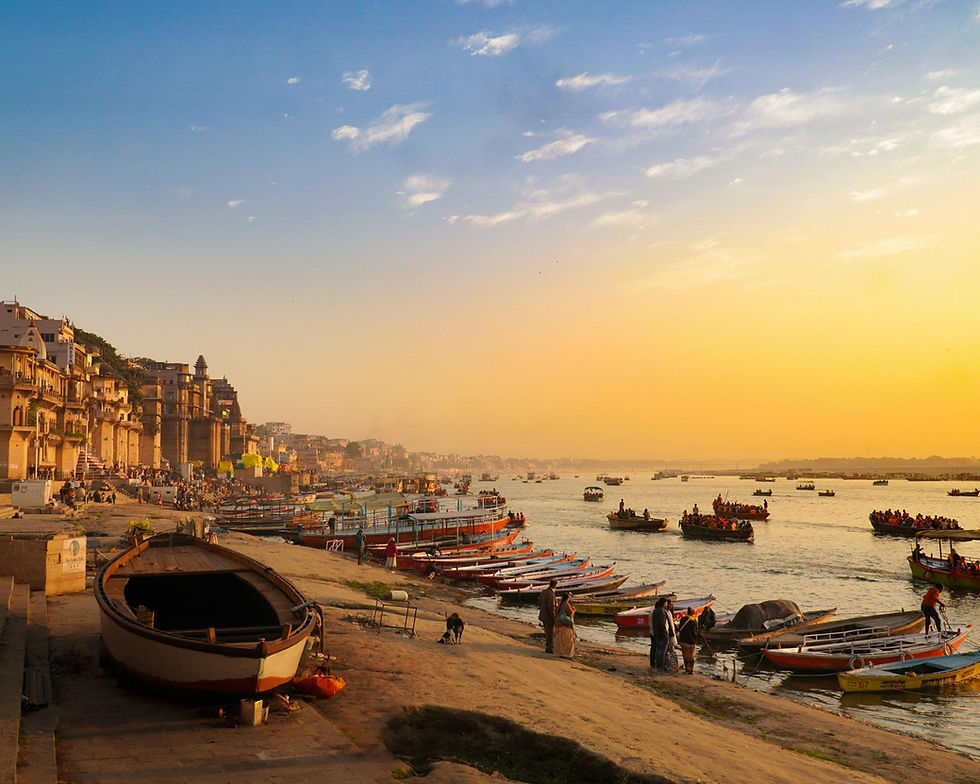
How to Structure Your Overall Itinerary
Do not try to compress a Ganges sunrise boat ride, an extensive old-city walking tour, Sarnath, and the evening Aarti ceremony into a single 24-hour window.
Give Varanasi at least three full days:
Day 1: Varanasi riverside ghats, old city walking tour, and evening Ganga Aarti.
See this Viator tour: Full Day Varanasi Private Tour with Temples, Ghats and Rituals
Day 2: Morning half-day trip to Sarnath, followed by a restful afternoon and local craft markets (such as this Banarasi silk weaving experience).
Day 3: Dawn boat ride along the Ganges, temple visits (e.g., Kashi Vishwanath), and cultural culinary exploration.
Further Reading & Resources
Why the UNESCO Inscription Matters Today
While World Heritage status brings renewed global attention, infrastructure enhancements, and preservation funding to Sarnath, the fundamental reason to visit remains unchanged. Sarnath offers an essential counterweight to the intense energy of Varanasi. In a single morning, you can trace the origins of a global faith, admire ancient stone carving that inspired modern Indian national symbols, and experience living international monasteries—all within a peaceful, highly walkable sanctuary.


