Why Lisbon's Hills Are Part of the Experience: A Guide to the City's Best Miradouros

Updated: Jun 24
One of the most common questions first-time visitors ask about Lisbon is whether the city is really as hilly as people claim.
The answer is yes. Lisbon is significantly hillier than cities such as Paris, London, Amsterdam, or Madrid. Streets climb steeply through several historic neighborhoods, staircases often connect one district to another, and routes that appear short on a map can take longer than expected.

What many travelers discover after arriving, however, is that Lisbon's hills are also one of the reasons the city is so memorable.
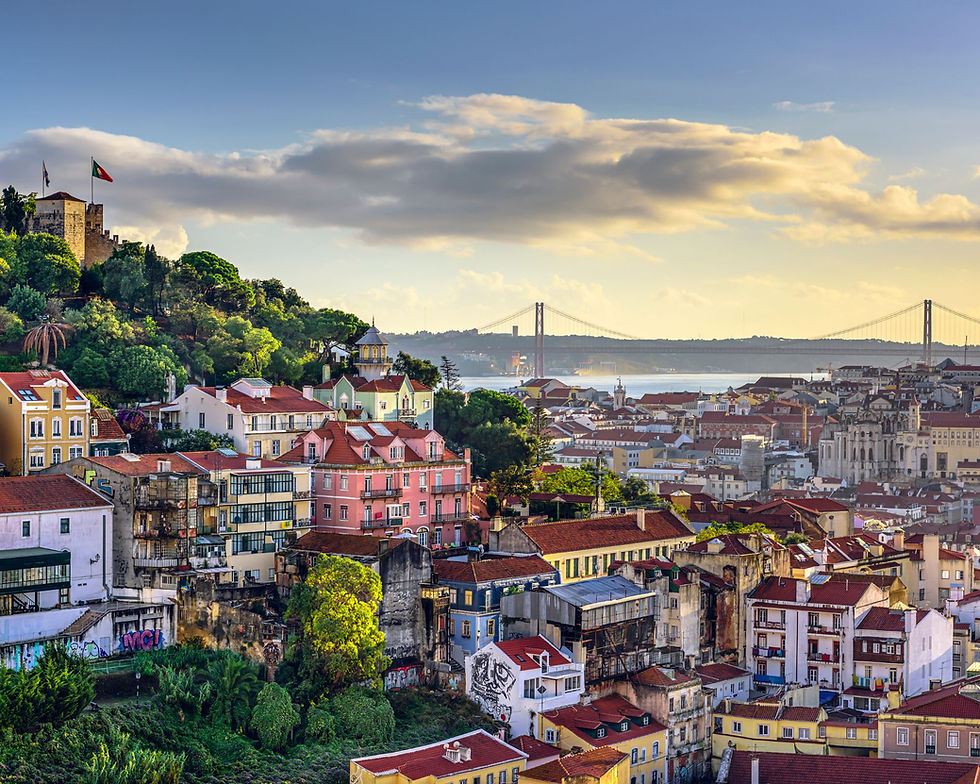
The elevated geography creates a network of public viewpoints known as miradouros, many of which offer sweeping views over the city's rooftops, historic neighborhoods, the Tagus River, and some of Lisbon's most important landmarks. These viewpoints are not isolated attractions. They are integrated into parks, public squares, and neighborhood gathering spaces throughout the city.
For visitors trying to decide whether Lisbon's hills are worth the effort, the miradouros are often the answer.
What Is a Miradouro?
A miradouro is a public viewpoint designed to take advantage of Lisbon's geography. Since the city developed across a series of hills overlooking the Tagus River, numerous terraces and lookout points were established over time to provide views across the surrounding neighborhoods. Many include benches, landscaped gardens, shaded areas, and traditional kiosks selling drinks and snacks.
Unlike observation decks found in many large cities, Lisbon's viewpoints are typically free to access and form part of the public realm. Most are woven directly into residential neighborhoods, which means visitors often encounter them naturally while exploring the city.

Are Lisbon's Hills Difficult to Navigate?
Lisbon's hills are real, but they are often exaggerated.
The steepest neighborhoods are generally Alfama, Graça, and Castelo, where narrow streets climb toward the city's highest elevations. By contrast, Baixa, much of the riverfront, and Belém are relatively flat and easy to walk.
The city also offers several ways to reduce the amount of uphill walking required. Historic trams connect many major attractions, funicular railways help visitors reach higher neighborhoods, and taxis or rideshare services are widely available.
Many travelers find that the most practical approach is to use transportation to reach upper neighborhoods and then explore on foot while gradually moving downhill.
Can You Visit Lisbon With Older Parents?
Yes, provided expectations and daily plans are adjusted accordingly.
Travelers visiting Lisbon with older parents often have concerns about the hills, but many of the city's major attractions can still be visited comfortably. Staying in Baixa or Chiado provides easier access to transportation and minimizes the need for constant uphill walking. Instead of attempting full-day walking itineraries through Alfama or Graça, it often makes more sense to visit one area at a time and use taxis, trams, or rideshares between neighborhoods.
Several of Lisbon's most famous viewpoints are also accessible without significant physical effort, particularly if transportation is used strategically.
The Best Miradouros in Lisbon
Miradouro de Santa Luzia

Miradouro de Santa Luzia is one of Lisbon's most photographed viewpoints and is often the image people associate with the city. Located above Alfama, the terrace overlooks the neighborhood's dense concentration of terracotta rooftops as they descend toward the Tagus River. The viewpoint is also known for its decorative blue-and-white azulejo panels depicting scenes from Lisbon's history.
Because it sits between Lisbon Cathedral and São Jorge Castle, Santa Luzia is easy to incorporate into a day spent exploring the historic center.
What You'll See
Alfama's rooftops
The Tagus River
The Monastery of São Vicente de Fora
Historic azulejo tile panels
Miradouro das Portas do Sol

A short walk from Santa Luzia, Portas do Sol offers one of the clearest views of Alfama. The terrace looks directly across the neighborhood's layered rooftops, churches, courtyards, and narrow streets before opening toward the river. Because of its broad, unobstructed view, it is often considered one of the best places to appreciate Lisbon's urban geography. The viewpoint is particularly popular in the morning when sunlight illuminates the eastern side of the city.
What You'll See
Alfama
The Tagus River
Church towers and historic buildings
One of Lisbon's most recognizable panoramas
Miradouro da Senhora do Monte

Situated in Graça, Senhora do Monte occupies one of the highest points in central Lisbon. The elevated position provides a broader perspective than many other viewpoints, making it possible to see São Jorge Castle, downtown Lisbon, the river, and the April 25 Bridge from a single location. While reaching the viewpoint involves more uphill walking than some alternatives, many visitors consider it the best overall panorama in the city.
What You'll See
São Jorge Castle
Downtown Lisbon
The Tagus River
The April 25 Bridge
One of the widest views in Lisbon
Miradouro de São Pedro de Alcântara

Located between Bairro Alto and Príncipe Real, São Pedro de Alcântara offers a different perspective from the viewpoints above Alfama. Instead of looking toward the river, visitors face directly toward São Jorge Castle and the eastern hills of Lisbon. The viewpoint is laid out as a landscaped terrace with gardens, fountains, seating areas, and a kiosk. Because the historic Glória Funicular stops nearby, it is one of the easiest viewpoints to access.
What You'll See
São Jorge Castle
Central Lisbon
The hills of the eastern city
Formal gardens and public terraces
Miradouro do Castelo de São Jorge

The viewpoints surrounding São Jorge Castle combine panoramic views with one of Lisbon's most important historic sites. From the castle walls and terraces, visitors gain a clear understanding of how Lisbon developed around its hills and waterfront. The elevated position offers views over Baixa, Alfama, the riverfront, and much of the modern city beyond. Unlike the other viewpoints on this list, access requires a castle admission ticket.
What You'll See
Baixa
Alfama
The Tagus River
Lisbon's historic center
The castle's medieval fortifications
The Easiest Viewpoints to Reach

For travelers concerned about mobility, several viewpoints offer excellent views without requiring a demanding climb. Miradouro de São Pedro de Alcântara is one of the easiest thanks to the Glória Funicular. Miradouro de Santa Luzia and Miradouro das Portas do Sol can both be reached by tram, taxi, or rideshare, making them practical choices for visitors traveling with older parents or anyone who prefers a slower pace. Miradouro da Senhora do Monte offers one of the best panoramas in Lisbon, but it generally requires more walking and is best suited to visitors comfortable navigating steeper streets.
Why the Miradouros Matter
The viewpoints are not simply places to take photographs. They help explain the structure of the city itself. From a miradouro, it becomes easier to understand how neighborhoods such as Alfama, Graça, Baixa, Castelo, and Bairro Alto relate to one another, how the Tagus River shaped Lisbon's development, and why the city's geography feels so different from many other European capitals.
They also provide natural stopping points throughout the day. Rather than rushing between attractions, visitors can pause, orient themselves, and appreciate the landscape that makes Lisbon distinctive.
For travelers concerned about the city's hills, the viewpoints ultimately demonstrate why those climbs exist in the first place. Lisbon's geography can require a little extra effort, but it also creates some of the most rewarding urban views in Europe.
Continue Planning Your Lisbon Trip
After exploring Lisbon's viewpoints, continue planning your visit with these guides: