Is Sagrada Família Worth It? What to Know Before You Go

The Sagrada Família is one of the rare global landmarks that actually exceeds the hype. It is not just another cathedral; it is a structural experiment that has been evolving for over 140 years. However, in 2026—a landmark year for the basilica—the experience is defined by how well you navigate the crowds and the logistics.
Understanding the Context: You Are in Catalonia
It is important to recognize that the Sagrada Família is not just a Spanish landmark; it is the crowning achievement of Catalan Modernism. Barcelona is the capital of Catalonia, a region with its own distinct language (Catalan), history, and cultural identity.
Antoni Gaudí’s work is deeply rooted in this Catalan identity, drawing inspiration from the local landscape—from the jagged peaks of Montserrat to the Mediterranean coastline. Understanding that this is a project of the Catalan people, funded for decades by private donations, adds a necessary layer of respect to your visit.
2026: A Historic Turning Point
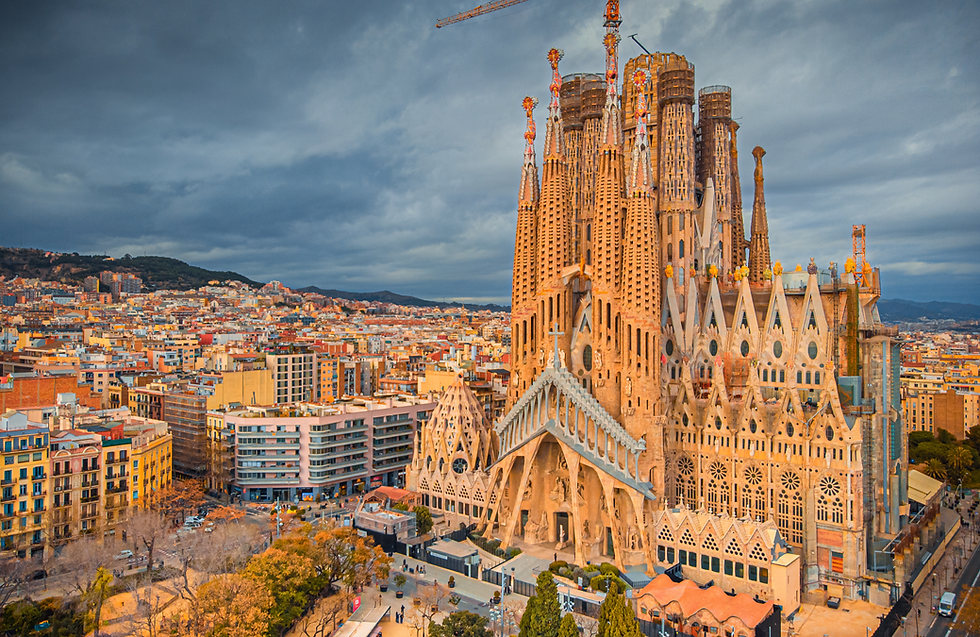
2026 marks the centenary of Antoni Gaudí’s death. As of early 2026, the exterior structure is finally complete with the placement of the final central tower (the Tower of Jesus Christ). While interior decorative work and the grand stairway will continue toward a 2034 final completion, visiting now allows you to see the silhouette Gaudí originally envisioned for the first time in history.
Tickets: The Non-Negotiable Rule
Do not show up without a pre-booked ticket. There is no longer a traditional "walk-up" ticket window for immediate entry.
Basic Entry: Approximately €30. Includes a downloadable audioguide app (essential for context).
Entry + Towers: Approximately €47.
Availability: Time slots for 2026 are often booked out 7–10 days in advance, especially during peak spring and summer months.
The Towers: Worth the Extra Cost?
This is the most common question. Accessing the towers (the Nativity or Passion facades) involves taking an elevator up and walking down a narrow, spiral stone staircase.
The View: It is more about the architectural detail (seeing the fruit-topped pinnacles up close) than the city skyline view.
The Verdict: If you are claustrophobic or have mobility issues, skip it. If you are an architecture enthusiast, the Passion Facade offers a unique perspective on the modern construction methods used to finish the project.
When to Go for the Best Experience
The Golden Hour: The interior is designed to be a "forest of light." The stained glass on the East (Nativity) side is cool-toned (blues/greens) for the morning, while the West (Passion) side is warm-toned (oranges/reds) for the afternoon. Late afternoon (3:00 PM – 5:00 PM) provides the most dramatic, fiery light across the nave.
The Quiet Window: The 9:00 AM slot is the only time the interior feels truly spacious.
Common Mistakes to Avoid
Treating it like a quick stop: Give yourself at least 90 minutes. This is a sensory experience, not just a photo op.
Missing the Crypt: Gaudí is buried in the crypt below. It is a quiet, reflective space that many tourists walk right past.
Ignoring the Museum: Located underground, it contains the original 3D models Gaudí used. Since his drawings were destroyed in the 1930s, these models are the only reason the church was able to be finished.
The Sagrada Família is worth every cent of the entry fee, provided you treat it as a timed appointment. It is a living piece of Catalan history that, as of 2026, has finally reached its full height.


