Copenhagen Travel Guide: What to See, What We Loved and How to Experience the City

Copenhagen gives you the postcard almost immediately: Nyhavn's colorful 17th-century facades lining the canal, wooden ships at anchor, royal palaces, copper-green spires and enough cobbled streets to confirm that you have indeed arrived in Scandinavia.
The more interesting Copenhagen reveals itself alongside all of that.

It is the father pedaling a cargo bike with two children sitting in the wooden box up front; people cycling with tennis racquets and work bags; friends sharing pizza on stone steps beside the canal; and a group arriving at a park with blankets, balloons and chilled bottles of wine. On a warm afternoon, people stretch out across the grass and stay there.
Of course, these aren't reasons to skip the sights. Copenhagen has excellent museums, royal history, distinctive architecture, Tivoli Gardens and one of Europe's most recognizable waterfronts. What makes the city particularly enjoyable is that there is so much to notice between them.
For a first visit, two full days cover many of the highlights; three lets you explore at a more relaxed pace. Here's what we would prioritize and how we would put it together.
Copenhagen Is a City in Motion
You expect bicycles in Copenhagen, but you may not expect how quickly they stop looking remarkable.
There are bikes with wicker baskets, bikes with child seats, electric bikes and the distinctive Danish christianiabikes, large cargo tricycles resembling wooden carts. Children sit inside them, groceries disappear into them, and occasionally a dog gets chauffeured around in one.
People cycle in summer dresses and office clothes, carrying tennis racquets, shopping and work bags. Parents, teenagers and older residents join the same steady flow. Very few look as though they are going cycling. They are simply going somewhere.
That is useful for visitors to understand because Copenhagen's bicycle lanes are transportation infrastructure, not recreational paths. Look carefully before crossing one; cyclists move quickly and expect pedestrians to stay out of their way.
You can rent a bike, but you don't need one. Central Copenhagen is compact enough to explore extensively on foot, while the Metro, buses, trains and harbor buses handle longer distances easily. Unless you are confident riding in busy urban bicycle traffic, walking and public transportation make a very good combination.
Start With Nyhavn, but Don't Stop There

Nyhavn is touristy, crowded and absolutely worth seeing.
The row of brightly colored townhouses facing the canal is as photogenic as advertised, particularly when the late-afternoon light catches the facades. Old wooden ships sit in the water, restaurant tables fill the quay and people line the canal edge.
Walk it, enjoy it and then keep going.
From Nyhavn, continue toward Amalienborg Palace, home of the Danish royal family, and the neighboring Marble Church. If your timing works, you can watch the changing of the Royal Guard; otherwise, the palace square itself is worth seeing.
From here, a longer walk takes you toward Kastellet, Copenhagen's star-shaped historic fortress, and the Little Mermaid.
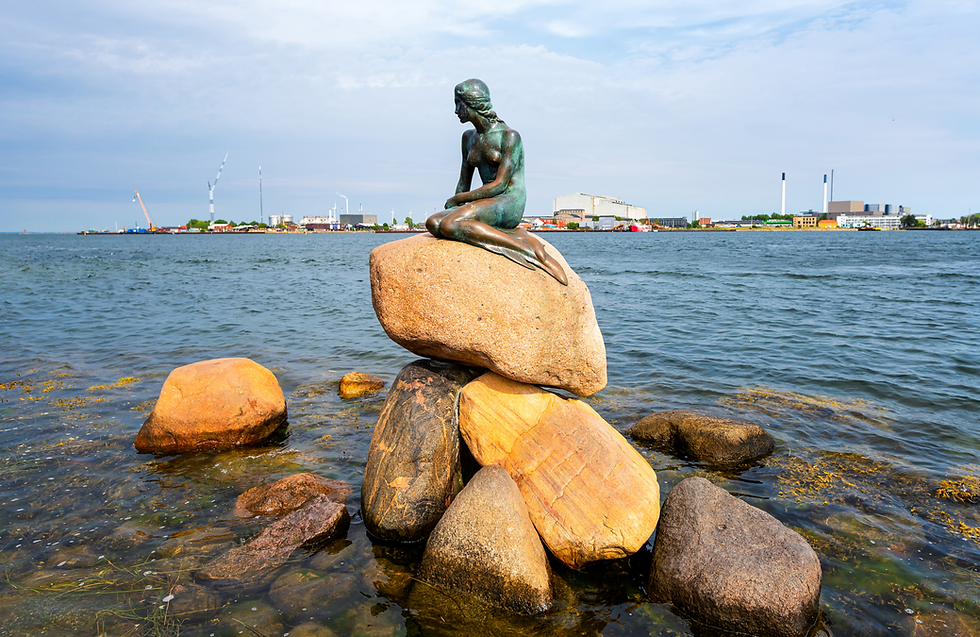
The Little Mermaid is exactly what you have probably heard: small. We wouldn't cross Copenhagen solely to see her, but that's not really necessary. Combined with Amalienborg, Kastellet and a waterfront walk, the statue becomes one stop on an enjoyable route rather than an attraction expected to justify an outing on its own.
This is how we found Copenhagen worked best: connect several sights geographically and pay attention to what happens along the way.
See Rosenborg Castle, Then Stay for the Garden

If you want to go inside one royal residence, Rosenborg Castle would be our choice.
Built for Christian IV in the early 17th century, Rosenborg has the turrets and ornamentation of a storybook royal castle, along with historic interiors, royal collections and the Danish Crown Jewels.
But don't leave as soon as you've seen the castle.
Outside is Kongens Have, or King's Garden, and on a summer weekend it offered an entirely different picture of Copenhagen.
Families spread blankets beneath mature trees while children played nearby. Broad-wheeled prams rested beside groups of friends. Beer, sparkling water, rosé and white wine came out with the food. One group arrived with balloons and a decorated wagon loaded with supplies for a celebration.
There was no reserved table, elaborate setup or sense that an afternoon together required much production. People found some grass, unpacked and stayed.
Public consumption of alcohol is generally permitted in Denmark, subject to local restrictions and public-order rules. If you come from somewhere with stricter open-container laws, the effect is noticeable. King's Garden feels less like ornamental green space surrounding a castle and more like a shared backyard.
It also helps explain hygge.
The Danish word has been exported around the world through candles, blankets and cozy cups of coffee, but social connection is central to it. Watching friends linger over wine beneath the trees makes hygge feel less like a decorating style and more like something people actually do.
If the weather is good, give the garden time.
Don't Try to Tour Every Palace

Copenhagen has enough royal and historic buildings to turn a short trip into a procession of grand rooms. Choose according to what interests you.
Rosenborg Castle is our pick for historic royal interiors and the Crown Jewels. Amalienborg fits naturally into a first-day walk and is associated with Denmark's present-day monarchy.
Choose Christiansborg Palace if politics and government interest you. Located on Slotsholmen, it houses the Danish Parliament, the Prime Minister's Office and the Supreme Court, alongside royal reception rooms still used by the monarchy.
The Round Tower, or Rundetaarn, offers something quite different. Inside, a broad spiral ramp winds toward the top. Christian IV commissioned the 17th-century Trinitatis complex as a church, university library and astronomical observatory, and the unusual ramp allowed horses and carriages to haul heavy equipment upward.
Then you step outside and are immediately back among bicycles, outdoor cafés, shops and pedestrian streets.
Copenhagen doesn't keep its history conveniently separated from everyday life. That's part of its appeal.
Use the Harbor, Not Just Nyhavn

A canal tour is worthwhile on a first visit. It provides a useful introduction to Copenhagen's architecture and waterways and helps you understand how much of the city is oriented toward the harbor.
But some of our favorite waterfront scenes happened on land.
Away from Nyhavn's crowds, friends sat on stone steps with takeaway meals. People gathered on wooden decks beside the water. Small electric picnic boats drifted past carrying snacks, drinks and groups of friends.
Operators such as GoBoat rent small electric boats that don't require a boating license, so getting onto the water can be relatively easy.
Every so often, a bright yellow Havnebus passes among them. It looks as though it might be another sightseeing boat, but it is part of Copenhagen's public transportation network, carrying regular passengers across the harbor.
That tells you quite a bit about the relationship Copenhagen has with its water.
The harbor spent decades being transformed from an industrial port into a cleaner recreational space with promenades, harbor baths and places to sit, swim and gather. People don't simply admire the waterfront; they incorporate it into their days.

Then there are the trampolines.
Along the Kalvebod Bølge waterfront promenade, trampolines are embedded directly into the pavement. We were walking along a sleek modern harborfront and suddenly found ourselves bouncing above the sidewalk.
It is hard to maintain a serious travel-writer persona on a trampoline.
Go to Designmuseum Danmark Even If You Think Danish Design Means Chairs

Before Designmuseum Danmark, Danish design mostly conjured images of beautifully crafted furniture for us.
The museum made the subject much bigger.
Furniture is certainly part of it, but so are lighting, textiles, fashion, graphics and everyday objects. Exhibitions explore why something is shaped the way it is, how a body uses it, what material makes sense and how design responds to ordinary problems.
Afterward, Copenhagen itself started looking different.
The cargo bike carrying two children through morning traffic suddenly belonged in the same conversation as the famous chair. So did the harbor bus, the cycling infrastructure and a waterfront promenade that somebody had decided would be improved by trampolines.
If you care about architecture, interiors, fashion, objects or how cities work, Designmuseum Danmark deserves time. If those things don't interest you, choose another Copenhagen museum rather than visiting because a guide says you should.
Read our full story: Designmuseum Danmark: What I Didn't Expect to Learn About Danish Design.
Save Tivoli for the Evening

We almost misunderstood Tivoli Gardens before going.
Calling it an amusement park is accurate but incomplete. Tivoli has operated in central Copenhagen since 1843, and its rides sit among gardens, restaurants, historic buildings and live entertainment. Adults come for dinner and drinks; families wander through the gardens; some visitors ride everything, while others barely ride anything.
That mix is what surprised us.
Unless rides are your main priority, we would go later in the day. Have dinner, walk through the gardens, see what entertainment is happening and stay as the lights come on.
Tivoli operates seasonally and programming changes, so check its current calendar before building your evening around it.
Read our full story: Tivoli Gardens Copenhagen: What It's Really Like and Whether It's Worth Going.
Even the Thrift Stores Look Designed

Copenhagen's central shopping streets have plenty of familiar international brands, but the vintage and secondhand stores were far more revealing.
Many weren't bargain-bin thrift stores at all. They were beautifully edited boutiques with carefully displayed pre-owned clothes and prices to match.
Only in Copenhagen do you walk into a thrift store so stylish that you quietly audit your own outfit at the door.
Secondhand here isn't presented only as the economical alternative to buying new. Good materials, longevity, personal style and reuse coexist quite comfortably. Even if you aren't planning a serious shopping trip, browsing a few stores offers another glimpse of Copenhagen's design sensibility.
Go Into a Supermarket

Some travel discoveries begin somewhere deeply glamorous. Ours however, began in Netto.
We went into the supermarket and encountered an extraordinary amount of rye bread. Different brands, textures and varieties occupied enough shelf space to make us wonder why Danes were eating so much of it.
That eventually led us to rugbrød, the dense rye bread central to Danish food culture and the traditional foundation of smørrebrød, Denmark's famous open-faced sandwiches.
Seeing all that bread in an ordinary supermarket made smørrebrød more interesting when we encountered it later. Rye wasn't simply something being served as a traditional specialty for visitors. It was sitting in people's shopping baskets.

Read our full story: Why Is There So Much Rye Bread in Copenhagen? From the Netto Aisle to Smørrebrød.
Vegetarian travelers can eat well in Copenhagen, but traditional Danish menus aren't automatically filled with substantial vegetarian choices. Check menus before committing to a restaurant, particularly if everyone in your group has different dietary needs. Our separate Vegetarian Food in Copenhagen guide covers what we found in much more detail.
And if you see a little cocoa treat covered in coconut at a café, try a havregrynskugle.
These traditional oat balls are generally made with rolled oats, cocoa, butter and sugar. Their intimidating Danish name turns out to be wonderfully literal: havregryn means rolled oats and kugle means ball or sphere.
Sometimes cultural education comes covered in coconut.
Leave Enough Time for Copenhagen to Surprise You


During our August visit, Copenhagen Pride transformed the central streets.
Rainbow flags stretched overhead. Shopfronts changed their displays. Music echoed off the buildings, parade floats moved through cheering crowds and people wore everything from ordinary summer clothes to elaborate costumes.
Among thousands of people, one participant carried a handwritten sign asking for help finding a job in Denmark before a visa expired. It was such a personal problem to carry through the middle of a huge public celebration that we noticed it immediately.
Denmark's history gives the event additional context: in 1989, it became the first country in the world to legally recognize same-sex registered partnerships.
Pride happened to coincide with our trip, so another visitor's Copenhagen will obviously look different. But that is precisely why we wouldn't schedule every hour. There are enough worthwhile attractions to fill several days, while a little unplanned time leaves room for a park, a café, a shop you didn't know about, something happening in the street or an unexpectedly good place beside the water.
How We Would Spend Two Days in Copenhagen

With two full days, we would stay in Copenhagen rather than adding a day trip.
Day One: Start at Nyhavn, then walk toward Amalienborg Palace and the Marble Church. Continue to Designmuseum Danmark if design interests you, then toward Kastellet and the Little Mermaid. Spend some time along the harbor or take a canal tour before going to Tivoli in the late afternoon or evening.

Day Two: Visit Rosenborg Castle and leave time for King's Garden. Continue through central Copenhagen toward the Round Tower and Christiansborg area, choosing interiors according to your interests rather than trying to tour everything. Use the rest of the afternoon for smørrebrød, shopping, the waterfront or somewhere you noticed on your first day and wanted to explore.
That gives you royal history, architecture, design, food, water and Tivoli without spending two days watching the clock.
If You Have Three Days

A third day gives Copenhagen something it benefits from: time.
Explore Christianshavn, spend longer around the harbor, visit another museum, seek out a neighborhood beyond the historic center or devote a few hours to food and shopping.
You can certainly take a day trip to places such as Roskilde or cross the Øresund to Sweden, but with only three days we wouldn't automatically leave Copenhagen. There is enough here to justify the extra day, particularly if you prefer traveling without packing every hour.
With four days or more, an excursion becomes much easier to add.
Where to Stay

For a short first visit, staying relatively central makes exploring Copenhagen considerably easier.
Indre By gives you maximum convenience for the historic center and many major sights. Vesterbro works well if restaurants and nightlife are important, while Christianshavn offers canals and a more residential waterfront atmosphere without putting you far from the center.
Accommodation can be expensive, and the best choice isn't necessarily the most luxurious hotel. Location, room size and how you plan to use the space matter. Families, longer-stay travelers and anyone who wants a kitchen should also compare apartment-style accommodation.
We cover the tradeoffs in our separate Where to Stay in Copenhagen guide.
Before You Go
Check Copenhagen's actual forecast rather than packing for the word Scandinavia. During our summer visit, warm weather brought out light dresses, shorts and sandals, and our heavier clothes suddenly felt rather unnecessary. Conditions can change, so layers and something for rain still make sense.
Comfortable shoes are important because Copenhagen rewards walking even when public transportation is readily available. Check current opening information for museums and palaces, and verify Tivoli's seasonal schedule before planning your evening.
For a first trip, choose the palaces and museums that genuinely interest you, spend time around the harbor, try the food and leave enough room to enjoy the places you find between the major sights. Two days gives you a strong introduction; a third makes it easier to slow the pace, return somewhere you liked or explore beyond the historic center.
That is where Copenhagen's compact size really works in your favor: Nyhavn, Rosenborg, Tivoli and the city's museums provide plenty to see, while the cargo bikes, picnic-filled parks, harbor life, secondhand shops and other small discoveries give each day its character. You can come with a plan without needing to account for every hour.
And if a waterfront trampoline appears while you are simply walking somewhere, get on it.
